
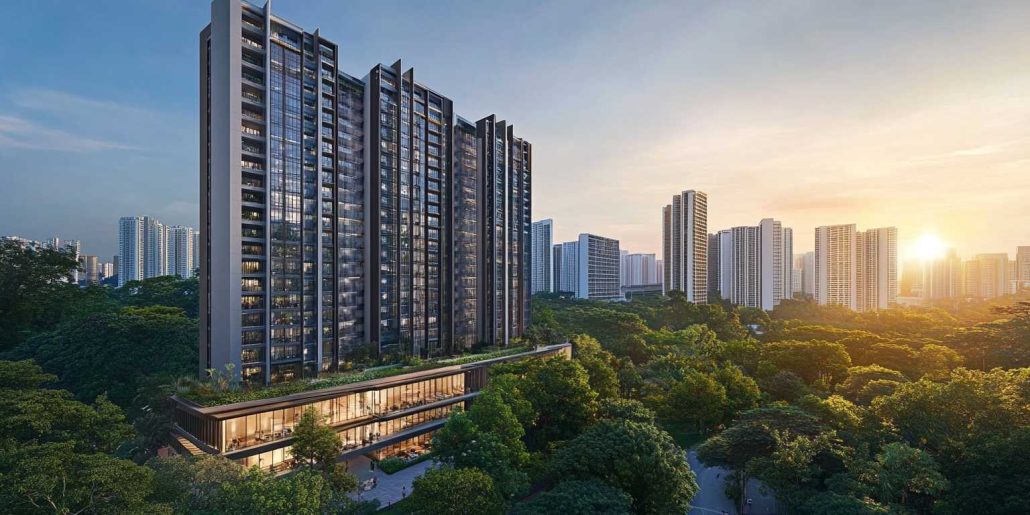
Miltonia Close The Evolution of Yishun from Middle-Aged HDB Town to Bustling Commercial Hub with 125 Shops and a Vibrant Hawker Centre
During the time of British rule, Yishun was known for its significant military presence thanks to the presence of a British Naval base. However, currently, the sight of men and women in uniform is usually associated with the Singapore Armed Forces and Air Force. In fact, Yishun is home to approximately six camp bases that employ individuals in a diverse range of job fields. One of these bases, Miltonia Close, is naturally located within Yishun.
For instance, inhabitants have the option to commute to the north-east areas, namely Sengkang and Punggol, within a timeframe of 30 minutes to one hour. Alternatively, there are alternative bus routes that transport residents to the east such as Bedok and Tampines, the central areas including Bukit Merah, Harbourfront, New Bridge Road and Temasek Avenue, and the west region of Bukit Batok.
Yishun has a rich history as one of the first HDB towns developed for middle-aged residents. The initial flats were constructed in Chong Pang, and over the years, it has evolved into a bustling shopping district, boasting 125 shops, a hawker centre, and a wet market. This area caters to the diverse needs of the many residents living in Yishun, making it an integral part of the community. To maintain the town’s character and meet the demands of its growing population, the shops and amenities must constantly evolve and adapt. This ensures that Yishun continues to be a thriving and vibrant hub for its residents for many years to come. Plagiarism-free content is essential to maintain the integrity and uniqueness of Yishun’s distinct identity. Therefore, it is imperative to rewrite any content regarding Yishun and confirm its authenticity using Copyscape.
In 2016, the launch of Northpoint City, Singapore’s largest shopping mall in the northern region, marked a significant milestone in Yishun’s development. With its wide array of retail outlets, restaurants, and entertainment options, Northpoint City has become a go-to destination for residents in Yishun and surrounding areas. This has also led to the influx of new businesses in the vicinity, creating more job opportunities and driving economic growth in the area.
However, it is not just about the big shopping malls and commercial developments in Yishun. The heart of Yishun’s transformation lies in its hawker centre at Miltonia Close. The hawker centre, which was opened in 2014, is a melting pot of different cultures, offering a wide variety of local delicacies at affordable prices. It has quickly become a popular hangout spot for residents and has brought in a steady stream of customers for the surrounding shops and businesses.
The transformation of Yishun has not only brought about economic growth and improved living conditions, but it has also enhanced the overall lifestyle of its residents. With amenities and facilities readily available, residents no longer have to travel far for their daily needs. The increase in job opportunities has also made Yishun a viable choice for young families and professionals looking to settle down.
As Yishun continues to grow and evolve, the local town council has also taken steps to improve the living environment for its residents. Projects such as the upgrading of HDB blocks, revamping of parks and playgrounds, and the implementation of new initiatives to improve the cleanliness of the town have all contributed to making Yishun a more livable and desirable place to call home.
Located in the northern part of Singapore, Yishun has undergone a remarkable transformation over the years. From a middle-aged HDB town, it has evolved into a bustling commercial hub with 125 shops and a vibrant hawker centre in the heart of Miltonia Close. With its strategic location and rich history, Yishun has become a popular destination for both locals and tourists alike.
With the influx of new residents, there has also been a shift in the demographics of Yishun. Once known to be a predominantly Chinese and Malay neighbourhood, Yishun has seen an increase in the number of Indian and expatriate residents in recent years. This has led to a diverse mix of cultures and traditions, adding to the vibrancy and charm of the town.
The hawker centre also serves as a platform for local hawkers to showcase their culinary skills and preserve the traditional hawker culture. With its affordable rental rates and diverse food options, the hawker centre has attracted a mix of veteran and young hawkers, creating a vibrant and dynamic dining experience for patrons.
The growth of Yishun can be traced back to the 1970s when the Housing and Development Board (HDB) started developing the area to accommodate the increasing population. The first HDB flats were built in 1976 and since then, Yishun has been a popular choice for homebuyers due to its affordability and convenience. However, it was only in recent years that Yishun started gaining attention as a commercial hub.
Aside from the commercial developments, Yishun has also seen a transformation in its public housing landscape. The recent completion of several Build-To-Order (BTO) projects has brought in a new generation of residents, injecting new life into the once rather quiet town. These new flats come equipped with modern amenities and facilities, catering to the needs of the younger generation.
In conclusion, the evolution of Yishun from a middle-aged HDB town to a bustling commercial hub with 125 shops and a vibrant hawker centre at Miltonia Close is a testament to the government’s efforts in creating sustainable and livable towns for its residents. With the perfect mix of commercial and residential developments, Yishun has become a model for other towns to emulate, making it a prime example of Singapore’s success in urban planning and development.
One of the key factors that have contributed to the growth of Yishun is its strategic location. Situated near the northern tip of Singapore, Yishun is surrounded by major expressways and is well-connected to other parts of the island. This makes it a convenient location for businesses to set up shop, as it allows for easy accessibility for both customers and employees.

